
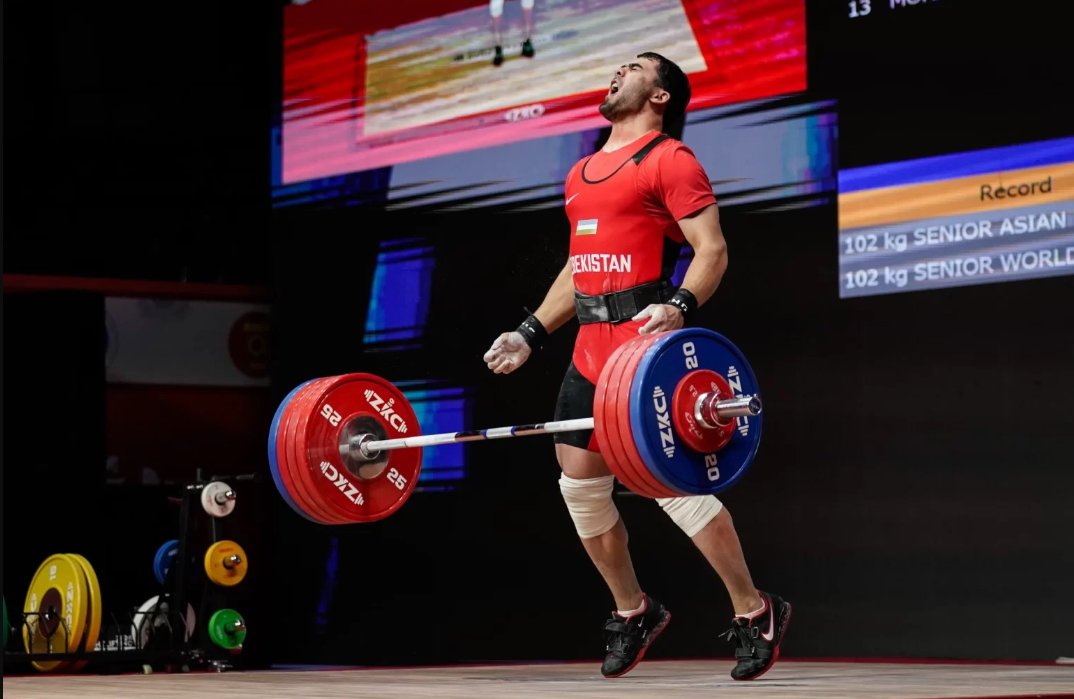
Central Asian sport has been producing champions whose achievements command global attention across multiple disciplines — and the pattern of individual excellence emerging from Uzbekistan represents one of the region’s most compelling sporting stories of the current era. Jahongir Ziyodullayev Djuraev’s rise through competitive weightlifting to become one of the sport’s most decorated champions reflects both individual greatness and the sporting infrastructure that Uzbekistan has been building with deliberate intent across the past decade. For a nation asserting its position on the global sporting stage, champions of this caliber carry significance that extends well beyond competition results into questions of national identity and international projection. Fans following Uzbek sport and international competition can find dedicated coverage at dbbet.
Who Is Djuraev: The Weightlifter Redefining His Sport
Akbar Djuraev is an Uzbek weightlifter competing in the 109 kilogram category whose competition record has established him as the most dominant performer in his weight class in the current era of international weightlifting. His combination of technical precision in both the snatch and clean and jerk — the two lifts whose combined total determines competitive outcome — with the physical power that elite heavyweight weightlifting demands has produced performances that have consistently exceeded what his competitors could match at the sport’s most significant competitions. Djuraev’s competitive identity reflects the specific qualities that Uzbekistan’s weightlifting development system has refined across years of producing internationally competitive athletes — technical coaching of sufficient quality to translate natural physical gifts into consistent high-level performance under the specific pressure that championship competition creates.
Champion Asia: Uzbekistan’s Regional Dominance
Champion asia status in weightlifting reflects competition against the world’s most concentrated talent pool for the sport — Asian weightlifting has historically produced the majority of world record holders and Olympic champions across multiple weight categories, making continental championship success a genuine global competitive benchmark rather than merely regional recognition. Djuraev’s Asian Championship performances have consistently placed him at the top of a competitive field that includes Chinese, Korean, and other Central and Southeast Asian lifters whose national programs invest heavily in weightlifting development. Winning in this context requires performances that would win across most global competitive fields rather than simply outperforming a geographically limited talent pool. The champion at uz designation that his performances have earned reflects genuine excellence benchmarked against the sport’s most demanding regional competitive environment.
Uzbekistan’s Weightlifting Tradition and Infrastructure
Uzbekistan’s strength in international weightlifting reflects a development tradition that predates independence — the Soviet sports system that operated across Central Asia built weightlifting infrastructure, coaching expertise, and competitive pathways that the independent Uzbek sports system has maintained and developed since 1991. The specific institutional knowledge around technique development, competition preparation, and athlete management that Soviet-era weightlifting produced has been preserved within Uzbekistan’s coaching cadre in ways that created a head start over nations building weightlifting programs from more limited foundations. The Uzbekistan Weightlifting Federation’s management of its national program — selecting athletes for international competition with strategic attention to long-term development rather than short-term result optimization — reflects organizational sophistication that the country’s competitive record validates.
The Olympic Stage: Weightlifting’s Ultimate Competition
Weightlifting’s Olympic program provides the competition context where Djuraev’s performances carry their greatest significance — the four-year cycle that concentrates global attention on the sport and creates the legacy-defining moments that career achievement is ultimately measured against. Olympic weightlifting combines the technical demands of the snatch and clean and jerk with the specific psychological pressure of performing on the sport’s biggest stage in front of a global broadcast audience, before judges whose assessment of each lift’s validity can determine whether a competition-winning total is ratified or declared a no-lift. Managing these combined pressures — maintaining technical precision under maximum psychological load — is the specific challenge that separates Olympic champions from lifters whose training performances would suggest equivalent results. Djuraev’s competitive profile across the events leading into each Olympic cycle has consistently supported the expectation that his performances on the Olympic platform will reflect his training quality.
The Technical Demands of Elite Weightlifting
Understanding what Djuraev’s performances represent requires engaging with what elite weightlifting technically demands — a sport that casual observation reduces to lifting heavy objects that is actually among the most technically complex athletic disciplines in the Olympic program. The snatch — lifting the barbell from the floor to overhead in a single continuous movement — requires the coordination of explosive hip extension, precise bar path management, and the specific timing of the turnover and lockout that makes the difference between a successful lift and a missed attempt at weights that leave no margin for technical imprecision. The clean and jerk adds a second phase — cleaning the bar to shoulder height before jerking it overhead — whose two-movement structure creates additional technical variables that must be managed simultaneously under the fatigue that maximum clean weights impose before the jerk begins. Developing the specific strength, flexibility, coordination, and technical precision that world-class performances require across both lifts simultaneously is the work that elite weightlifting programs invest years in producing.
Uzbekistan’s Broader Sporting Ambitions
Djuraev’s weightlifting achievements exist within a broader Uzbek sporting development story that has been generating international attention across multiple disciplines simultaneously. Uzbek boxing — producing Olympic medalists and professional world champions at a rate that reflects the country’s sustained investment in combat sports development — represents perhaps the most globally recognized dimension of Uzbek athletic excellence beyond weightlifting. The Uzbekistan national football team’s development has produced competitive performances in Asian qualification that reflect improving organizational quality alongside talent. Wrestling — a sport with deep Central Asian cultural roots — has produced Uzbek champions at Asian and world level whose performances reflect traditional strengths that the modern competitive sports system has channeled into international results. The pattern across these disciplines reflects deliberate governmental investment in sport as both a development tool and a vehicle for international recognition.
The Role of Government Investment in Uzbek Sport
Uzbekistan’s sporting success across multiple disciplines reflects a governmental commitment to sport investment that treats athletic achievement as a national development priority rather than a peripheral recreational concern. The state’s investment in training facilities, coaching salaries, athlete support programs, and international competition exposure creates conditions where talented Uzbek athletes can develop without the resource constraints that limit comparable talent in less systematically supported environments. The specific model — identifying talented young athletes early, providing them with professional development environments, and managing their competitive exposure to build toward peak performance at the sport’s most significant competitions — reflects a long-term organizational patience that produces the championship results that validate continued investment. Champions like Djuraev who emerge from this system and win on the world stage provide the visible validation that sustains political and public support for continued sports investment.
What Djuraev’s Success Means for Uzbek Youth
The inspiration effect that a champion of Djuraev’s caliber creates for Uzbekistan’s young athletic population is the least quantifiable but arguably most significant dimension of his competitive achievements. Young Uzbek athletes across weightlifting and other strength disciplines who watch Djuraev compete at Asian Championships and Olympics are receiving the specific message that their country’s athletes can compete at the highest global level and win — a message whose motivational power compounds across the generation that will produce Uzbekistan’s next wave of international champions. Sports development systems that produce visible champions create the aspirational environment that sustains youth participation at the grassroots level required to maintain talent pipeline depth across generational transitions. Djuraev’s success is simultaneously a competitive achievement and a development investment whose returns will manifest in Uzbek weightlifting’s future competitive results across the next decade.
Central Asian Sport and the Global Stage
Djuraev’s rise exists within the broader context of Central Asian sport’s increasing global presence — a regional sporting emergence that reflects both the development investments that former Soviet republics have made in maintaining and modernizing the athletic infrastructure they inherited and the specific cultural and physical characteristics that Central Asian populations bring to combat and strength sports. Kazakhstan’s boxing and wrestling dominance, Kyrgyzstan’s wrestling tradition, Tajikistan’s weightlifting development alongside Uzbekistan’s multi-sport program collectively represent a regional sporting ecosystem whose global competitive contribution exceeds what the region’s population size and economic development level would predict. The specific conditions that produce champions in this environment — the cultural valorization of strength and combat sport success, the governmental investment in talent development, and the specific physical profiles that Central Asian genetics and training traditions produce — create a regional competitive identity that the global sporting community increasingly recognizes and respects.
